7/14/2013

Understanding and Analyzing Unstabilized Approach


Understanding and Analyzing Unstabilized Approach   
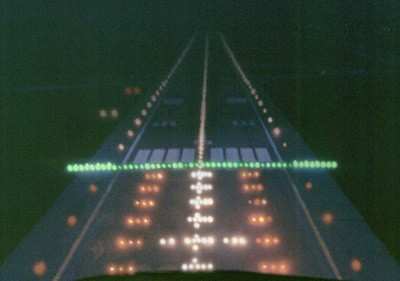


If we want to understand Error-Related Accidents we must put ourselves in the real of the problem, when aircraft accidents happen. Through my safety blog I always want to share the best approach to all Pilots all around the world, no matter in what Country you as a Pilot working for, to understand a respectable clear concept why accidents happen and why we as Pilots we can avoided and stay away in the prevention of accidents and incidents and working together with your Airline Safety Department to review your SOPs regarding circumstances  suggests that an accident resulting from landing from an unstabilized approach may be continue if we don’t place attention the examples of the last accidents in Global Aviation .

When an Airplane Crash happens there are many hypotheses about what’s going until the final investigation will closed and distributed the best recommendations regarding about that accident, but the most important evidence is to understand why this accident happened and why this incident can be avoided to prevent future accidents similar in the same conditions.

While the Annex 13 has been adopted pursuant the provisions to the convention on International Civil Aviation Aircraft Accident and Incident investigation, the manual makes it very clear to circulated good safety recommendations the state of the accident investi­gation authority of the State conducting the investigation, based on information derived from the investigation, made with the intention of preventing accidents or incidents.

The only objective for the investigation, as stated in Annex 13, the sole objective of the investigation of an accident or incident shall be the prevention of accidents and incidents. It is not the purpose of this activity to apportion blame or liability.

As a Human Being as Pilots should never judge anyone in this profession, there is always a lot of speculation about when an accident occurs, the most important thing is to study and focus where was the error and trying to identify on time for the prevention of future accidents.

Also, pilots may be conservative; to understanding the problem of unstabilized approach what that mean and focus and work hard of the analysis of unstabilized approach events.

All pilots are trained to base cockpit decisions on strategic and analytic reasoning, while realistic decision-making theory recommends that experts in naturalistic settings, like pilots, make decisions based on experience.

My best recommendation to all pilots is to study all this accidents and examined the willingness and ability of general aviation pilots to execute immediately a go around if you think you are involved  during unstabilized approach take immediate action on time , it doesn't matter if you are in a good clear conditions or in low-visibility conditions .  

The purpose of analyzing and working during your simulator training with your flight instructor it is good to practice to understand the strategies that pilots need to recognize, when you are approaching during unstabalized approach, to land the plane safely during the approach.

Flight Instructors must assist flight crews in their performance of stabilized approaches and provide cases of accidents and established programs that help understanding between pilots and team building, resulted in a significant reduction in unstabilized approaches and follow up and review your company SOPs .

Controlled flight into terrain accidents (CFIT ) are seen as the result of system-induced errors. In some cases, programs have been adopted that helped improve mutual understanding and improving pilots awareness of the risks associated with their actions during approach and improving training on unstabilized approaches and also to understanding and have clear that the new modern technology and display systems , it is highly questionable whether total system safety is always enhanced by assigning functions to automatic devices rather than human operators, and there is some reason to believe that flight-deck automation may have already passed its optimum point. This is an age-old question in the human factors occupation, and there are few guidelines available to the system designer.

Some automation-related aircraft accidents and incidents are discussed as examples of human factors problems in automated flight during the last fatal crashes involved commercial airlines, also you as a pilot need to understand well the concept of the Aeronautical Lighting and other Airport Visual Aids for a Safe Landing , some pilots forget this important perceptions during landing.

Always remember that the term Pilot Error is an action or decision of the pilot that , if not fixed and corrected on time , could be contribute to the occurrence of an accident or incident .

I want to be emphasis that the term Pilot Error does not imply that all errors are the fault of the pilot.
For this same reason I always share this phrase again with all the aviation community to stay away from accidents and incidents and fly safely all the time.

The day you think you don't learn more in aviation, it is the time you need to stop working and retired in this profession, because maybe you are going to make the mistake of your life. In aviation every day you learn new things.


7/10/2013

Safety Experts Find Pilots Reluctant To Abort Landings

Safety Experts Find Pilots Reluctant To Abort Landings 


Airline pilots occasionally must decide whether to abort a landing because the approach isn't quite right, as with Asiana Airlines Flight 214, and safety experts are studying the industry reluctance to circle an airport and try again.
In the Asiana crash, the pilot's decision seconds before impact to try a "go-around" came too late and the plane crashed Saturday at San Francisco International Airport, killing two passengers and injuring more than 160.

More often, a mistake in the landing means a "runway excursion" where the plane runs off the end or side of a runway with little or no injuries. But safety experts have found pilots reluctant to abandon landings, so they are studying whether there would be fewer accidents if they performed more go-arounds.

"It's not that they're making the wrong decision necessarily, it's how they get led down that path," said Rudy Quevedo, director of global programs at the Flight Safety Foundation, which studies aviation accidents. "One of the biggest things that we see is that the pilots don't feel a threat -- they feel they can recover."

The foundation reviewed 16 years of accidents worldwide and found that one-third involved runway excursions. In studying the biggest risks for excursions, the foundation surveyed 2,500 pilots worldwide and discovered that a plane approaching a landing in an "unstable" way occurs in 3.5% to 4% of all approaches, according to a report released in February.

With more than 20,000 flights each day in the USA, the problems quickly add up. A stable approach means the plane is on the right path at the right height and speed, with the flaps and landing gear in the right positions. Unstable means one or more of those elements may be off.


In the Asiana crash, investigators found the plane was going much slower than the 137 knots intended at landing; it was at 103 knots three seconds before impact. Crash investigators said the flight-data recorder found pilots began increasing the throttle eight seconds before impact and called for a go-around 1.5 seconds before impact.


Major airlines have rules calling for pilots to perform go-arounds if their descents are unstable when they reach 500 feet above the ground on a clear day or 1,000 feet off the ground when pilots are flying with instruments.
But the foundation discovered that pilots perform go-arounds in only about 3% of their unstable approaches. The studies are continuing, but the foundation found reasons for the reluctance include a pilot's pride in completing the job, reduced fuel at destinations and the lack of attention on unstable approaches when planes land safely.

"It's not a pilot problem and it's not a management problem -- it's really an industry problem," Quevedo said. "We need to understand why."
John Cox, a former commercial pilot and president of Safety Operating Systems consulting firm, said more study is needed.

"My speculation is that using experience, (pilots) recognize that they're not very far out and they'll be within the stable criteria within a few seconds," Cox said. "It is very much worth a deeper look."
One aspect of the studies is whether a dramatic increase in the number of go-arounds would improve safety.

"What could be the risk?" Quevedo asked. "Could we make something worse, in effect, or would it be better?"


Earlier this month, the National Transportation Safety Board urged the Federal Aviation Administration to change its rules so that planes aren't placed on collision courses when one plane is performing a go-around and another plane is either taking off or landing on another runway.


The NTSB noticed five incidents in recent years - including three in Las Vegas - where planes got too close together when one performed a go-around and another plane was either taking off or landing on another runway.
Nobody was injured in the incidents and in several cases the pilots didn't even see each other.

The FAA said in a statement that the agency "thoroughly investigated the incidents and took aggressive steps to address the causes," and that the agency would respond formally to the NTSB.

The Asiana crash is expected to focus more attention on go-arounds.

"I think this Asiana accident potentially has the possibility of being one of those catalysts for increased training on go-around and accepting a go-around at an even earlier time," Cox said.


7/07/2013

Why Accidents Happen??

Why Accidents Happen??


When a plane crash occurs always people questioned what was happened, is a modern aircraft with the greatest technologies in aviation, but unfortunately these events happen.

Understanding what causes an accident often is like looking at an Iceberg. We see the accident as the tip of the Iceberg, but all coincidences why accidents happen.

Anyone involved in flying needs to learn the lessons of the past accidents, identifying the underlying causes and lessons learned from accidents to prevent aviation accidents.

Each accident case also includes a surgically precise analysis of what happened that is intended to find the casual factors in this mishap.

Pilots flying an airplane as a B-777 are a well-trained crew prepared to overcome any emergency occurring during any phase of the flight with several flying hours and experience to flying this type of aircraft.

Everything is hypothesis regarding this serious accident. Investigators in charge are the only people who can determine and collect all the evidences to evaluate what’s going on in this tragic accident.

Of course now Human Factors going to be a very important piece and how it applies in the investigation,
Human factors is about people, it I about people in their working and living environments, and it is a about relationship with equipment procedures and the environment.

Accidents impact people and all the Aviation community. Now the Investigators in charge are the only people to collect all the evidence and established what’s going on to avoid future accidents and prevent and avoided.

This information is only and hypothesis and also a professional interpretation, the investigators are the only people who will evaluate the FDR, FDA, Voice Recorders etc. to contributed what’s going with the B- 777 at the final moments during landing before crashed.

There are so many ways and so many places that errors can occur that you as a Pilot may wonder how it is possible for anyone to Fly Safely.

Even though this observation is to help to understand when Pilots, in general, are more likely to have accidents, it does not mean that you are invulnerable if you don’t match the outline.

My best recommendation to all Crews and the best attitude to have is that you are vulnerable at all times and that you should exercise caution at all times and fly safely.

The process of learning Is a good example of where human factors can play a major role.

Continuously I like to share this expression with all the Aviation Community.  The day you think you don't learn more in aviation, it is the time you need to stop working and retired in this profession, because maybe you are going to make the mistake of your life. In aviation every day you learn new things, always remember fly safely all the time.


http://flightsafety.org/fsd/fsd_aug04.pdf


7/05/2013

Pilot Guide to Takeoff Safety

Pilot Guide to Takeoff Safety


The concept of Safety is very important in Pilot Decision Making.
Pilot decision making often is a fundamental element in accident causal chains, where a Pilot didn’t make the best Safety Decision about flying or non-flying situation.
It is estimated that about ¾ all fatal General Aviation accidents are attributed to Pilot performance.

Safety is an important part of all the work we are doing both in the air or on the ground, for Safety is the prevention of accidents or to reduce them.

Pilots must work all the time improve to achievement more information in an effort to avoid an accident during takeoff or any phase during flying.

I want to review and share this interesting issue regarding some basic definitions to develop and explore always new ways to avoid accidents and incidents in General Aviation.

Safety First, Zero Accident has been around for a long time. It sounds respectable, but unfortunately, it never has been. Recognized and corrected both if you think do not remember some of the concepts of the variation of some basic operational considerations are shown in this article.

Expected Conclusion: Provide new decision aids and educational training and develop the appropriate existing material.

The Rules:

Some basic FAA definitions may be useful talking specific performance, also more detailed descriptions of FAA, ICAO requirements can be found in the material attached to this article.
Takeoff must be based on a smooth, dry, hard surface runway.


Takeoff Speeds :

VMCG (Ground): The minimum calibrated airspeed at which the airplane is satisfactorily controllable with the use of primary aerodynamic controls alone following the failure of the critical engine. Maximum permitted lateral deviation from the runway centerline is 25 feet. Use of nose wheel steering including rudder pedal steering is not permitted in the determination of VMCG.

VMCA (AIR ) : The calibrated airspeed at which , with all engines developing maximum thrust and when the critical engine is suddenly made inoperative, it is possible to recover control of the airplane with that engine still inoperative and maintain straight flight either with zero yaw or , at the option of the applicant, with the angle of bank of not more than 5 degrees. During the recovery , using a maximum rudder pedal force 180 lbs., the airplane must not require any exceptional piloting skill, alertness or strength to prevent a heading change of more than 20 degrees.  


V1  Takeoff Decision Speed : As speed selected by the applicant which must be at least the minimum calibrated airspeed at which controllability is shown (during the takeoff run ) to be adequate to safely continue the takeoff using normal piloting skill when the critical engine is suddenly  made inoperative.
V1 may not be less than VMCG or greater then VR.

V2 Min Takeoff Safety Speed : May not be less than 1.2 Vs for turbojet powered airplanes without provisions for obtaining a significant reduction in the one engine inoperative power- on stalling speed.
May not be less than 1.10 VMC.

V2 Takeoff Safety Speed : Must be selected by the applicant to provide at least the required gradient of climb but may not be less than V2 MIN or VR plus the speed gained before reaching a height of 35 feet above the takeoff surface .

VMU Minimum Unstick Speed : The calibrated airspeed at and above which the airplane can safely lift off the ground and continue the take off .

VR Rotation Speed : May not be less than V1 or 1.05 VMCA or the speed that allows reaching V2 before the airplane reaches a height of 35 feet above the takeoff surface , or a speed that will result in a VLOF not less than 10 percent above VMU if the airplane is rotated at its maximum practicable rate with all engines operating (5 % with one engine inoperative).

VLOF Lift Off Speed : Is the calibrated airspeed at which the airplane first become airborne .

Speed Abuses :

It must be shown that the one engine inoperative takeoff distance using a rotation of 5 Knots less than VR does not exceed the corresponding one-engine –inoperative take off distance using the established.

Reasonable expected variations in service from the established takeoff procedures for the operation of the airplane (such as over rotation of the airplane or out of trim conditions) may not result in unsafe flight characteristics or marked increases in the scheduled takeoff distances.   

Distance :


Acellerated –Stop Distance : The sum of the distances necessary to Accelerate the airplane from a standing start to V1 and come to a full stop from the point at which V1 is reached assuming that the critical engine fails at V1 . The accelerate-stop –distance may include a Stopway.


Stopway: An area beyond the takeoff runway no less wide than the runway and centered or the extended centerline of the runway , able to support the airplane during an aborted takeoff  without causing structural damage to the airplane , and designated by the airport authorities for use in decelerating the airplane during an aborted takeoff .


Clearway: An area beyond the runway, not less than 500 feet wide,centrally located about the extended centerline of the runway, and under the control of the airport authorities. The clearway is not expressed in terms of a clearway plane, extending from the end of the runway with an upward slope not exceeding 1.25 percent, above which no object nor any terrain protrudes. However, threshold lights may above the plane if their height above the end of the runway is 26 inches or less and they are located to each side of the runway. The takeoff distance must not exceed the length of the runway plus the length of any clearway except that length of any clearway included must not be greater than one half the length of the runway. Also one half the distance from liftoff to the end of takeoff run must occur over the runway.


Takeoff Distance : The greater of the horizontal distance along the takeoff path from the start of the takeoff to the point at which the airplane is 35 feet above the takeoff surface considering an engine failure at V1 or 115 percent of the horizontal distance along the takeoff path, with all engines operating  from  the start of the takeoff  to the point at which the airplane is 35 feet above the takeoff surface.

Takeoff Run : If the takeoff distance includes a clearway, the takeoff run is the greater of the horizontal distance along the takeoff path from the start of the takeoff point equidistant between the point at which VLOF is reached and the point at which the airplane is 35 feet above the takeoff surface considering an engine failure at V1 or 115 percent of the horizontal distance along the takeoff path, with all engines operating, from the start or the takeoff to a point equidistant between the point at VLOF is reached and the point at which the airplane is 35 feet above the takeoff surface.

Takeoff Path : The takeoff path extends from a standing start point in the takeoff at which the airplane is 1500 feet above the takeoff surface, or to a point at which the transition from the takeoff to the enroute configuration is completed at an appropriate speed – whichever point is higher .
 

The airplane must be accelerated on the ground to V1 at which point the critical engine is made inoperative and remains inoperative for the rest of the takeoff. The airplane must then be accelerated to V2 during which time the nose gear may be raised off the ground at a speed no less than VR.
The landing gear retraction cannot be begun until airplane is airborne.

The slope of the airborne part of the takeoff path must be positive. The airplane must reach V2 before it is 35 feet above the takeoff surface and must continue at a speed as close as practical to, but not less than, V2 until it is 400 feet above the takeoff surface.

http://www.faa.gov/other_visit/aviation_industry/airline_operators/training/media/takeoff_safety.pdf


Always Fly Safely !!!!


6/23/2013

The Pilot Fatigue Recognition of the Problem

The Pilot Fatigue Recognition of the Problem
Causes, Symptoms and Effects of Pilot Fatigue


For many years, Pilot Fatigue has been a real issue. Airline pilots, as well Cargo Crews, corporate and private pilots can all face fatigue while on the profession. While Pilot Fatigue can be common, it poses a very troubling threat to aviation safety and should be taken really serious to avoid aviation accidents and incidents.

There is a long history of arguments between Governing Agencies, Airline Pilots and the Unions, and also Aircraft Operators over Pilot Fatigue Issues. Today, the issue is still being disputed as the industry tries to find a joint solution in an effort to the reduction the risks connected with fatigue.
Pilot Fatigue has been a real problem since the beginning of air travel in all around the world; obviously, fatigue is caused by lack of sleep. But it's not always that simple. It can manifest acutely, such as after a long trip, the definition of fatigue also is a source of difficulty which has tended to generate misperception and delay progress. 

All Pilots need to understand well the concept of Pilot Fatigue. Here are some specific Causes :
Symptoms and Effects of fatigue:

Lack of quality sleep, Interruption of Circadian Rhythm, Sleep Disturbances, Jet Lag  , Mental or Emotional Stress (such as family problems, anxiety, or Checkride Stress) , Poor health, including dehydration or poor diet .

Symptoms of Fatigue: Falling asleep, Yawning, Poor Visual Perception, Feeling "Sluggish" or "Sleepy”, Decreased Reaction Time, Decreased Concentration.
Effects of Fatigue: Lack of Motivation, Poor Performance of Tasks, Forgetfulness, Poor Judgment,
Diminished decision-making skills, including making rash decisions or lack of making a decision at all.

One of the last crashed and a good example to analysis was the Colgan Air crash close to Buffalo-Niagara International Airport 2009 on the winter season at that time.

Fatigue is a very real problem for flight crews if the Pilots don’t understand well the concept.
While the FAA and aviation operators can help mitigate the risks of pilot fatigue through education, changes to flight hour limitations and other fatigue management programs, the ultimate responsibility of fatigue management lies with pilots themselves.

I want to focus especially in the nature of sleep, the most common Physiological Symptom related with long – range flying is disturbance  of the normal Sleep Pattern .
Sleep Patterns, has been divided into two basics kinds, Orthodox and Paradoxical (or REM),


I'm sure when any of you as Pilots when are reading this post relating with the Pilot Fatigue Issue , are going to ask some questions, what that mean those two expressions Orthodox and Paradoxical (or REM), of course , some remain confused , because maybe suddenly  they have never heard this words in relating with the concern  about Pilot Fatigue .

The acronym REM is derived from the initials of Rapid Eye Movement, one of the initial characteristics discovered in Paradoxical Sleep. Orthodox Sleep is occasionally called Non REM Sleep.
Each Kind of Sleep has its own characteristics. 
The more you know about Aviation Safety Concepts the more you grow in your profession.

Most pilots learn, when they read more concepts why accidents happen, and how we can be prevented.

Don't ever let you know, you know everything, the day you think you don't learn more in aviation, it is the time you need to stop working and retired in this profession , because maybe you are going  to make the mistake of your  life . In aviation every day you learn new things, always remember fly safely all the time.

The Successful Safety Pilot must have all the time all the Concepts Clear, and always stay away to prevent incidents and accidents inside your airplane.
There is no reason why not to learn more about Aviation Safety. Fly Safe!!!


My mind clicks on and off.
I try letting one eyelid close at a time while I prop the other with my will.
But the effect is too much, sleep is winning, my whole body argues dully that nothing, nothing life can attain is quite, so desirable as sleep. My mind is losing resolution and control.
Charles Lindbergh about his 1927 Transatlantic Flight


6/11/2013

Human Error Classification


Human Error Classification 

In my previous post, I wrote about the related term Pilot Error, I want to extend the information that is very interesting in what are the procedures concerning why accidents happen, as I expressed the term
pilot error does not imply that all errors are the fault of the Pilot.

Now review this other information, my point is too helpful to look at accident statistic in General
Aviation in the past and the latest aviation accidents, because the term Pilot Error give you an idea of the human factor problem.

The most common particular causes of the accidents, in order of incidence, also you can see and read almost all of these area a result of disastrous pilot performance and as a good evidence that not sometimes is  a result of aircraft equipment malfunction .

Loss of directional control , poor judgment , airspeed not maintained ,poor preflight planning and poor decision making, clearance not maintained , inadvertent stalls , poor crosswind handling , poor inflight planning and poor decision making .

In Human Factors a simple model of pilot performance is very essential, and also in my personal interpretation as an Aviation Accident Investigator, that I have been worked in several accidents in the research and participation recovering evidences to have clear information why accidents happened and also why and how the pilot crashed. There were a variety of types of errors.

In Human Factors, there are Human Error, the nature of error, in aviation human error is closely related in the appreciations  of the Aviation Community and in the reality why incidents and accidents happening recently but happen , for this reason all pilots we must always be well prepared on the issues for the prevention of accidents .

For example Error Rates, what that mean? Human Factors anticipated and having established that is normal for a human being make errors but, it is important to ask how often this is likely to occur, and also what error rates are considered normal. I remember I was reading on a Human Factors book, a respectable example on average, a person will make an error in dialing a telephone number on a round dial about once in 20 minutes. Also I remember on that lecture, the author said the performance is rather better with push-button selection. Numerous studies of Human Errors rates during the performance of simple repetitive tasks have revealed that errors can normally be expected to occur about once in 100 times.

These are normal human errors rates, because we are humans, and nobody is perfect, the most important is to recognize on time that error to avoid the accident or incident on time.

Of course it is clear that errors can vary widely depending on the task and also other many factors such as a very important topic in Aviation, like a good example Pilot Fatigue etc.

The Source of errors, in the model SHELL the model described the interface between the Liveware and Hardware (L-H) is very often the source of errors.

This is another interesting issue later I want to write on my Safety Blog regarding these concepts , so these concepts were often some source of errors in general aviation .

This is why CRM is very important to understand to minimize the errors inside the cockpits.
Leadership is also required a good interpersonal skill and a good technical ability, including to communicate well, to manage all the resources effectively to avoid pilot errors during our tasks as pilots.

The Classification of Errors: may be in term of source, an error can occur any time anywhere and also in seconds of time, but the most important is to recognize why the pilot induced the error, and can be attributed directly maybe to inadequate performance inside the cockpit.

The classification of some error as Random Error, Systematic Error, Sporadic Error etc.

As Pilots we need to recognize the kind of error classification, and also of course be applied to the performance of the other task, to avoid an accident or incident.

The basic principle to understand all these concepts is to read and do a good research regarding the classification of errors, by setting a good example and be prepared all the time to be a good Safety Pilot.

Always remember, when accidents occur, the crew is evaluated as a team.


6/08/2013

Pilot Error Accidents


Pilot Error is an action or decision of the Pilot that, if not fixed and corrected on time, might contribute to the occurrence of an accident or incident.

Many Aircraft Accidents are attributed to "pilot error," as if there is a difference. So another concept in human error is the error chain, in each Aircraft Accidents there are a series of errors that link together to form the error chain, is not broken on time to prevent the accident. In other words, if one link of the chain were broken, the accident would not happen.

Pilot Error, does not indicate that all errors are the fault of the Pilot. Sometimes other external circumstances are the cause of accidents or incidents.

Knowing why Pilots make errors is helpful in development preventing always more methods such creating more intense training programs and redesigning new strategies to avoid future accidents.

As Pilots commonly called Human Factors is about people, is about people in the working and living environments, and also is their relationship with the equipment procedures and the environment.
Human Factors deals with errors that pilot make, and why these errors happened, and how we as Pilots
how we can prevent them .

As I have mentioned, Pilot Error is given as the primary cause in the majority of accidents.
However, it is possible that Pilot Error can reduce accidents if the Pilot made a conscious decision to continue to improving every day about the concept of Safety and learn from the latest accidents happened in the past.

In my professional interpretation concerning and sharing this information, I want to help to understand when Pilots in general, are more likely to have an accident or incident , it does not mean to understand that accidents could be happen any time anywhere, accidents and incidents happen in seconds , no matter if you gathering to many flight time in your log book for many years , the best attitude to have is that every Pilot are vulnerable at all times and that should exercise caution all  times.

Always improving your ability to learn, the best way is to learn is by being an active participant in the learning process, the more you process the information about why accidents happened, the better you will retain it.

We are humans and everyone makes mistakes no one is perfect in life, but the most important is the responsibility for avoid accidents, because sometimes accidents is largely the fault of people, not the machines the fly.

Think Safety all the time, Safety is our greatest commitment of all in this business; friends don’t let friends to forget Safety, be alert all the time in your flights, and expect the unexpected, always fly safely.
Safety First !!!!