8/11/2021

What is Evidence Based Training (EBT)?


What is Evidence Based Training (EBT)?


All people who fly and airplane ask what is important about human factors and the role of the pilot flying a plane.

Accidents statistics seem to indicate that pilots do not have the appropriate tools to deal with their own roles in the cockpit. So, all pilots are trained to handle emergencies, such as engine failure or any electrical system failures, but they are sometimes no trained to handle the internal and external factors that act them.

Evidence based training (EBT) is a training and assessment technique based on operational data that is considered by developing and accessing the complete capability of a trainee across a range of core competencies rather than by evaluating the performance in individual events or maneuvers during simulators training.

What does EBT stand for in aviation?

When accidents happen the causes are always complex and involve coatings of technical, operational and human-factors issues. Evidence Based Training (EBT) has been developed to contest recurrent pilot training to the real risks of operating current modern aircraft in today's demanding operational environment.

So, Evidence-Based Training (EBT) in other words, is a new approach, developed on behalf of the International Civil Aviation Organization (ICAO), directed by a giant group of airline industry experts with the goal to increase the effectiveness of pilot training and meet the challenges of airline operations in the 21st Century to avoid and stay away of incidents and accidents. Also to develop a new model for competency-based training and assessment of airline pilots based on evidence.

How is Evidence-Based Training different from traditional pilot training?

There are two new and important aspects of EBT, which distinguish this type of training from the check-focused training of the past: Core competencies, and evidence.

So, what excellent pilots do to make things go well during your training in simulator sessions, and also during flying the airplane safe on the line? In my next post I will explain the meaning of these two concepts for the safety of your flights, Core and Evidence.

There are 9 core competencies of a professional pilot:

1. Communication.

2. Aircraft Flight Path Management - Manual Control.

3. Aircraft Flight Path Management - Automation.

4. Knowledge.

5. Leadership and teamwork.

6. Problem solving and decision making.

7. Application of procedures.

8. Workload management.

9. Situational Awareness.

Always keep in mind that flying is about people, much more so than about machines. To avoid any incident or accident increasing your awareness of human strengths will make you a safety pilot at all time you flying your airplane. Always fly safe!


1/17/2021

Aviation Safety Management Solutions


CRM 4 PILOTS AVIATION CONSULTING INC is an internationally recognized company, leading provider of aviation Crew Resource Management (CRM) training. 

CRM 4 PILOTS has been providing CRM training to aviation operators on an international base since 2012. CRM training courses are practical, and offer courses and consulting for aviation business, airlines, charter, flight schools, and also helicopters operators.

CRM 4 PILOTS recurrent training courses are appropriate for pilots, flight attendants, dispatchers, and other position if applicable. CRM 4 PILOTS include service training, consulting, and safety program implementation and aviation safety management solutions.

1 (954) 617-5374

Miami-Florida 


Startle Response / Aviation Safety


Startle Response / Aviation Safety 


Loss of Control In-flight (LOC-I) remains one of the most significant contributors to fatal aviation accidents worldwide in general and commercial aviation.

Loss of Control refers to accidents in which the flight crew was unable to maintain control of the aircraft in flight, causing in an unrecoverable deviation from the intended flight path.

Fatal General Aviation Accidents often result from inappropriate responses to unexpected events.

Humans are subject to a “Startle Response” when they are faced with unexpected emergency situations and may delay action or initiate inappropriate action in response to the emergency. Training and preparation can reduce startle response time and promote more effective and timely responses to emergencies.

Source:

FAA Aviation Safety Briefing 

https://www.faa.gov/news/safety_briefing/2017/media/se_topic_17_06.pdf


1/15/2021

The Concept of Startle Effect on Pilots during Critical Events


The Concept of Startle Effect on Pilots during Critical Events


I would take this opportunity to write and interesting subject, regarding and evaluating different scenarios that how a startle effect surprise pilots inside the cockpit, and is a contributing factor in multiple aviation incidents and accidents that have been recognized, during the investigation when an airplane crashed, the term startle effect can impact pilot performance in many hazardous ways.

There are some differences between startle and surprise: the terms startle and surprise are often used interchangeably in aviation operational training, a startle effect is a short-term, fast, and highly physiological reaction.

The conceptual model of startle and surprise are specific differences between surprises and startle increase questions regarding ground-based training to prepare flight crew for unexpected events in flight.

If you are no familiar with this concept model in aviation, I would like to share some interesting subjects that a startle effect is a good example often occurs when the autopilot disengages and hands control to the pilot in a highly dynamic, time-critical condition. So, according to human factors there are two systems they are play a different roles in our reaction as pilots, and a pilot error could be an action or decision that if not fixed and corrected on time could contribute to the occurrence of and accident or incident.

Take your time to read some of these pdf concepts, I want to share with the aviation community, to have more an idea what that mean a startle effect in general and commercial aviation.

Always remember fly safe, the best safety device in any aircraft is a well-trained safety pilot.

 Sources:

Startled Flight Safety Foundation 

https://www.icao.int/Meetings/LOCI/Presentations/Managing%20Startle%20Individual%20Crew%20and%20Organizational%20Strategies.pdf

https://research-repository.griffith.edu.au/bitstream/handle/10072/54072/82496_1.pdf

https://flightsafety.org/asw-article/startle-effect/

https://flightsafety.org/asw-article/training-for-startle/


12/08/2020

Winter Approaches / Weather Flight Planning


Weather Flight and the Pilot


As winter approaches, now’s a good time to write about Aviation Weather. So, when ice is encountered, all Pilots know how to do immediately to get out of it, of course you are a well-trained safety pilot , but you need to know no matter what is the condition , is freezing rain, freezing drizzle , it rarely requires that any pilot must  be and call for a positive action. Any accident prevention project it is very important to a good weather flight planning and the pilot must be understand the structure of a good weather briefing , especially in this type of the year as a winter approaches in the U.S .

A good weather briefing starts with developing an awareness of the big picture, so before attempting to get a detailed briefing. Before your flight you can usually do this by watching the news use your all resources as the weather channel, the weather report by using the FAA telephone information briefing service and also be in contact with your airline etc.

To refresh your memory, you remember the Flight Service Station (FSS) weather briefing there are three basic types of weather available from FSS, Standard, Abbreviated, and Outlook. Keep in mind the information presented will depend upon the specific briefing you request.

When contacting an FSS , tell the briefer which type of briefing you need, and give the following background that any Student Pilot , Private Pilot , Commercial Pilot identifies concerning what I’m feedback  today about weather .

Well there are a lot of others types of FSS briefings.  So, I want to remember some fatal accidents in the past some very important like the Air Florida Flight 90 on January 13, 1982 , flight departed from Washington International Airport and  crashed into the Bridge over the Potomac River.

The Boeing 737 was deiced with a mixture of heated water and monopropylene glycol before taxing, and later after takeoff crashed due Icing and Pilot Error.

Later few years after, the Colgan Air Flight 3407 on February 12, 2009 en route from Newark Liberty International Airport to Buffalo Niagara International Airport crashed in to the final phase approaching to the destination airport, the de-icing system was turned on 11 minutes into the flight by the crew, who discussed significant ice buildup on the aircraft's wings and windscreen shortly before the crash.

I don’t want to go more deep into further details regarding these accidents; my only purpose is to understand these accidents and share with all of you guys who read my safety blog during this important time of the year that winter coming soon, and why Ice is bad.

Pilots, remember always Ice in flight is bad news, it destroys the smooth flow of air, increasing drag while decreasing the ability of the airfoil to create lift. So, your airplane may stall at much higher speeds and lower angles of attack than normal. You need to know well the concept that it can roll or pitch uncontrollably, and recovery may be impossible.

Anyway, be vigilant all the time, do a proper Preflight, during Taxing, during Departure, En Route and Approach and Landing. Be carefully most Icing accidents occurring in the approach and landing phase of flight.

Pilots never take risks, use all your technological resources to check your weather report before flying , we identify and learned from all the records that fatal accidents in the past , weather has been a casual factor of Aviation Accidents .

Looking further into the past, I’m sure that this article can help you more as a Pilot during flying on winter time.

Always remember knowledge your aircraft, knowledge of existing and forecast weather, proper pre flights and planning a good flight are the key factors in the discipline to be a good Safety Pilot.

Even the most Experienced Pilot should not fly when presented with conditions that exceed his/ her ability, you as a Pilot must take logical decisions in turn lead to the Go/No-Go decision.

Each Pilot knows what I’m sharing today in this issue, even so the most experienced pilots make mistakes, remember we are humans and somebody can make mistakes.

A comprehensive Knowledge of how aircraft forms and how to manage with the hazards it presents is a must for the Competent Pilot. Always Fly Safely.

11/26/2020

BASIC CRM CONCEPT AVIATION SAFETY


 Prevention of Accidents: CRM (CREW RESOURCE MANAGEMENT)

CRM & AVIATION SAFETY :


The primary focus of a good CRM, is on communication, both who are inside the cockpit and those who are outside the cockpit too, such as Air Traffic Controller (ATC) dispatch etc.

A good and effective communication is the critical factor in Cockpit Management, because the most important aspect of CRM training is the interpersonal communication, a good communication means more than speaking clearly, with a correct phraseology, it’s also means that the other persons understands what you are saying, and also as well as you understand what the other person is saying.

Today I want to refresh to all my colleagues, in the aviation business, that there are five aspects of communication on which we need to focus always to have safest flights. Safety is always.

Remember always improving your proficiency in inquiry, advocacy, listening, conflict resolution, and critique, can help you become a good and excellent safety pilot and also a respectable resource manager and decision maker inside your cockpit.

Good decisions are based on good information. Pilots always remember in the cockpit, inquiry consists of gathering all the information you can, on both from your visual scan and from questioning the other crew members or outside resources, a very good example Air Traffic Controllers, pilots it also means, to refresh your memory and safety concepts, that means, asking always for any clarification when the information is not clearly understood, any professional pilot know what, I am writing here, this safety post again that means checking always your instruments, radios, charts etc, and fly safe at all time.

Safety is first. The concept of CRM over the last few years has been alarming the number of airline accidents in which the defective item was a bad interpretation of Cockpit Resource Management (CRM), and has been cited as a factor, but today to the new generation of pilots.

I am focus again in this important model, to avoid incidents and accidents, because in each of the last accidents in the past the captain failed to make effective decision because he, or his crew, did not use the proper concept of CRM practices.

In my other safety post, I am going to talk how to managing startle effect, and crew and organizational strategies. The effect of Startle on Pilots during critical events and also, going to write how the startle reflex on safety.

 Always Fly Safe!! 


1/14/2018

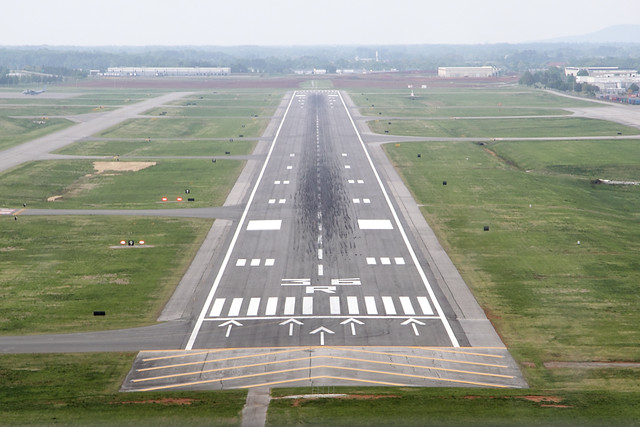
Stabilized Landings

Stabilized Landings


 Imagen relacionada


Happy New Year to all my readers and enjoy my Safety Blog! I wish you the best of health and happiness in 2018 and Fly Safely at all times.

So, today I want to share something very interesting some approach techniques on runway excursion prevention. I am very motivated person to promote Air Safety through the world to prevent Aviation Accidents in all type of phases during flying. 

Stabilized Approach criteria have successfully elevated in the Cockpit Awareness of risky approaches.

Runway excursion can occur on Take Off or Landing, let’s analyze  these expressions:

·         Veer Off: Depart the side of the runway.

·         Overrun: Depart the end of the runway.

Most common types of Approach and Landings accidents : landing veer off , landing overrun , unstabilized  approach , control flight in to terrain ( CFIT ) , collision with terrain no CFIT ,and runway overshoot . These comprise the 78 % of the total approach and landing accidents.

So, rushed and  unstabilized approaches  are the largest contributory  factor in Controlled Flight In to terrain ( CFIT ), and other approach  landing accidents . Evaluation some operations briefing notes approach techniques, rushed approaches result  in inadequate time for the flight crew to appropriately  plan , prepare , and execute a safe approach .

Specific Factors involved in rushed and unstabilized approaches. Therefore, flying stabilized approaches complying with the stabilization criteria and approach to understand well the concept to stay away from incidents and accidents is the key, so, if the Pilot continued flying and unstabilized approach, maybe the pilot will encounter some targets that should be met for the approach and need to understand the following these four steps strategy immediately to escape and incident or accident, anticipate, detect, correct and decide.

These strategies will constitute a common sense objective and reference for the Pilot Flying and the Pilot not flying the airplane.

Monitoring, provide the time an ability and attention must require in this final and critical phase of flying so back up timely and precise any deviation callouts for effective correction on time, positive corrective actions should be taken before any deviation that develop in to a challenging or a hazardous situation in which the only safe action is immediately execute a GO AROUND.

All crews have to remember these three essential parameters to be stabilized for a safe approach:

Aircraft Track, Flight Path Angle, and Air Speed.

So, associated flight operations briefing notes communicate, that the following notes must review with this information to share:


  •   Decent and Approach Profile Management.

  •   Energy Management during the Approach.

  •  Being Prepared to a GO AROUND Immediately.

  •   Flying Constant Angle Non Precision Approaches.

  •   The Final Approach Speed.

  •   Factors Affecting Landing Distances.


Resultado de imagen para Stabilized Landings


Keep in mind failure to Go Around contributed to one – third of all landing excursion accidents.

Always attempt to make a Stabilized Landing ,it  is a landing conducted where your aircraft is completely controlled from a point 50 feet above the threshold to a full stop on the landing surface, without any unintended or adverse aircraft deviations from the planned and briefed maneuver . 

Fly a Stabilized Approach always, the risk of an approach and landing accident or incident is increased if you don’t identify the strategies to reduce the risk of runway excursion , 
Fly Safely all time !!!

Latest Accident : Pegasus B738 at Trabzon on Jan 13th 2018, runway excursion
Aircraft next day in daylight
Source : The Aviation Herald 
 http://avherald.com/h?article=4b39bd2e&opt=0